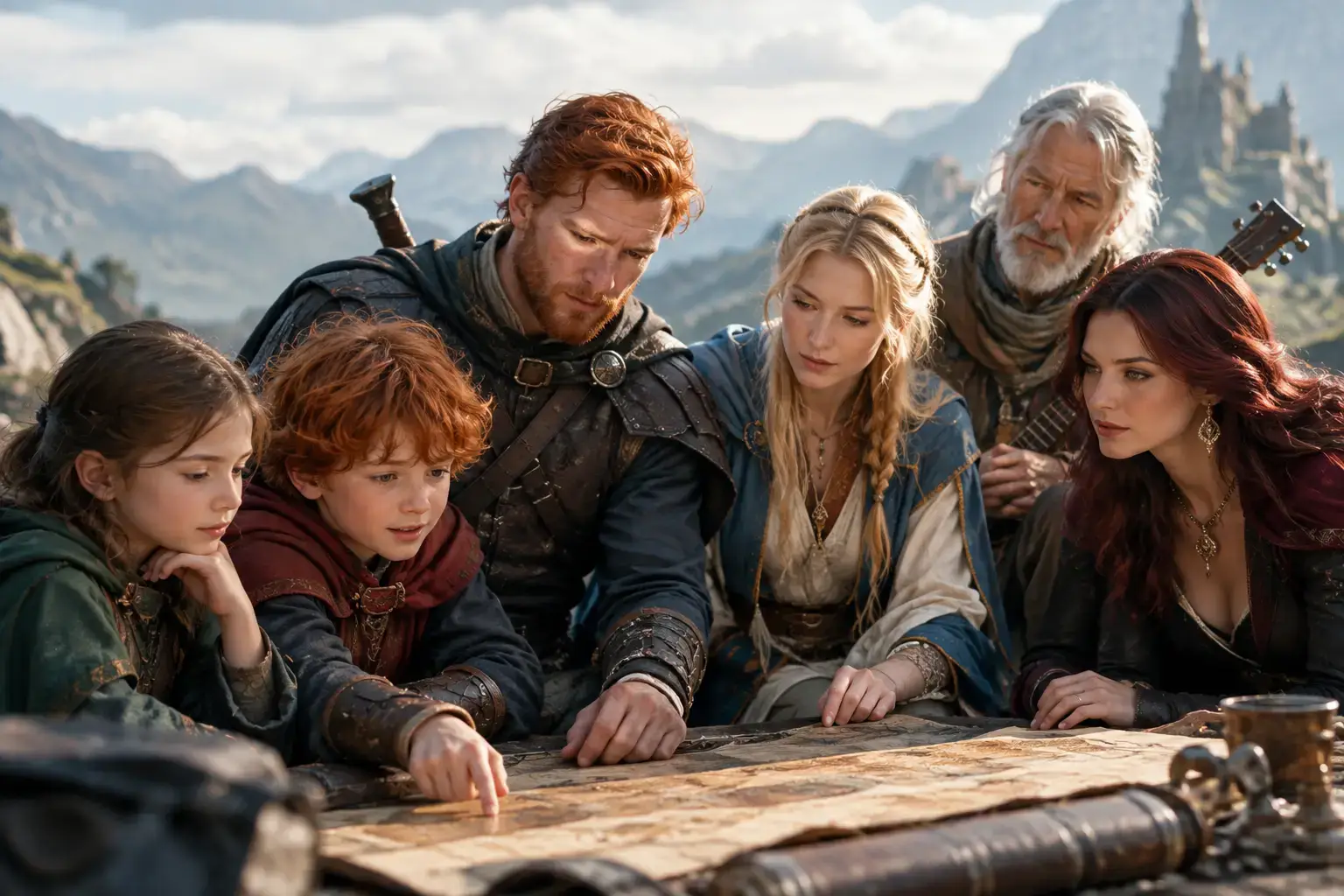
Campaign Momentum Problems: How to Keep Living Worlds Moving
The bell in the drowned chapel has rung three times. The cult is preparing something beneath the city. One character’s sister has vanished. Yet the group spends forty minutes debating which alley to investigate first, and when the session ends, nobody is quite sure what has changed.
Sound familiar?
Campaign momentum problems are among the most frustrating challenges in long-form tabletop roleplaying. The players may care deeply about their characters and the world, the Game Master may have prepared an entire network of mysteries and conflicts, and yet the campaign somehow feels as though it is standing still.
The obvious response is often to make something happen. Introduce another threat, reveal a new villain, put a clock on the next catastrophe.
But is that really the problem?
Perhaps the issue is not that the campaign lacks events. Perhaps the world has stopped responding to them.
Momentum is not speed. It is the feeling that something is moving, that decisions matter and that the next session begins in a world which is no longer quite the same as the one the players left behind.
So, how do we recognise campaign momentum problems, why do they develop, and what can a Game Master do to keep a campaign moving without taking away the freedom that makes it worth playing?
Why Do Campaign Momentum Problems Develop?
Sean: I think we should start by challenging one assumption. When a campaign slows down, people often blame the players.
Stacy: They aren’t interested enough, they don’t follow the plot, they spend too long talking about things that don’t matter…
Eljara: Or they refuse to investigate the mysterious door because somebody has sensibly pointed out that the last mysterious door contained six armed cultists.
Caelwyn: Which, to be fair, is a perfectly reasonable concern.
A campaign can slow down for many reasons. Sometimes players are uncertain about what they should pursue. Sometimes the available choices appear equally important. Sometimes the group has too many unresolved threads and cannot decide where to begin.
But there is another possibility.
The world itself may not be providing enough movement.
Consider a campaign in which a dangerous faction is preparing an operation. The Game Master knows what the faction intends to do, has prepared its resources and understands the consequences of success.
The players do not know all this.
They have discovered a few clues, heard several rumours and met some suspicious individuals. Yet nothing seems to change unless they actively investigate.
The faction waits.
The missing sister waits.
The city waits.
Eventually, the players begin to feel that the entire campaign is waiting for them to make the correct decision.
Eljara: That’s not freedom. That’s an administrative responsibility disguised as an adventure.
Sean: Especially when nobody knows which of the twelve available leads is actually important.
Stacy: Twelve? I thought we were being optimistic.
A campaign loses momentum when its different elements stop interacting in meaningful ways. Events may still occur, but they no longer create anticipation or influence the decisions of the people involved.
The solution is not necessarily more content.
It is movement with purpose.
A Living World Needs Its Own Momentum
Eljara: Why should the players always be the ones making things happen?
Sean: Because they’re the protagonists?
Eljara: They’re the protagonists of their characters’ experiences. That doesn’t mean they’re the only people living in the world.
This distinction is fundamental.
A living world contains people and organisations with their own interests. They pursue ambitions, protect resources, react to threats and make decisions whether the player characters are present or not.
A merchant association might negotiate a new contract. A noble family may attempt to strengthen its political position. A religious institution could respond to a scandal. A criminal organisation might exploit an opportunity created by the party’s previous actions.
These developments do not need to become immediate adventures.
They simply need to exist.
Stacy: So if the players spend three weeks investigating a murder, the rest of the city doesn’t politely suspend its activities?
Caelwyn: Precisely. The city continues living.
This creates a different kind of campaign momentum.
The players are no longer responsible for generating every development. Instead, they encounter a world that already has direction and discover how their decisions influence it.
A faction might gain influence while the party is elsewhere. An NPC could change allegiance. A community might recover from a previous crisis or become dependent on a powerful neighbour.
And sometimes an opportunity disappears because somebody else acted first.
Not every development needs to be a punishment. The world is not supposed to conspire against the players. It is supposed to behave like a world.
Momentum Is Not the Same as Constant Urgency
Sean: There’s another problem. Some Game Masters hear that a campaign needs momentum and immediately introduce a countdown.
Stacy: The city explodes in three days. The king dies tomorrow. The ancient god wakes at midnight.
Eljara: And apparently everybody has forgotten how to have a normal afternoon.
Caelwyn: Urgency has its place. But it cannot carry an entire campaign.
A permanent state of emergency eventually becomes ordinary.
If every session contains an imminent catastrophe, players may stop distinguishing between genuinely important threats and the usual background noise.
More importantly, they lose the opportunity to inhabit the world.
A campaign needs different rhythms.
Some developments require immediate attention. Others unfold slowly. Some are opportunities rather than threats. Others are simply part of ordinary life.
A political alliance might take months to develop. A family dispute could remain unresolved for years. A local community may gradually recover from a disaster.
None of these developments needs an artificial countdown.
Mara: I think people should sometimes have time to enjoy things they’ve worked for.
Chibi: Like cake.
Mara: Yes. Cake.
Caelwyn: An excellent example of sustainable progress.
A successful campaign gives players time to experience the results of their actions.
A repaired inn, a restored friendship, a community that has become safer or an institution the characters helped establish can provide powerful moments of satisfaction.
These are not interruptions to momentum.
They are evidence that something has changed.
Turn Open Questions into Meaningful Choices
One common cause of campaign momentum problems is an excess of unresolved questions.
Mystery is valuable. It creates curiosity and invites investigation. But when every lead is equally obscure, the players may struggle to understand what they can actually do.
Imagine that the group knows three things:
- A scholar has disappeared.
- A merchant is secretly financing a religious organisation.
- Someone has been seen entering the abandoned observatory at night.
All three might be interesting. But what connects them? Which developments are urgent? What might happen if the group ignores one of them?
The Game Master does not need to reveal the entire underlying story.
However, the players need enough information to make meaningful decisions.
Eljara: Perhaps the mistake is assuming that mystery automatically creates tension.
Sean: It creates questions. Those aren’t always the same thing.
Caelwyn: Quite right. A question becomes dramatically useful when the players have something meaningful to do with it.
Consider a different presentation.
The missing scholar was the last person seen speaking to the merchant. The observatory has recently been supplied with materials associated with the religious organisation. A local contact warns the characters that someone is asking about their investigation.
Now the group has something to consider.
They might pursue the merchant, investigate the observatory or protect their contact.
Each option has a different purpose and potential consequence.
The important thing is not that the Game Master tells them which choice is correct.
It is that the available choices mean something.
Keep the Field of Attention Manageable
A large campaign can contain dozens of active developments.
Players do not need to consider all of them simultaneously.
Bring a manageable number of tensions into the foreground. Let other developments continue in the background.
When an ignored thread eventually returns, allow the players to discover what has changed.
A faction may have achieved something. An NPC may have moved away. An opportunity may have disappeared.
The earlier decision to leave that matter alone now has context.
This creates continuity without demanding that the players manage the entire world.
Let Failure Change the Direction Rather Than Close the Door
Stacy: What about when the players simply fail? Sometimes an investigation really does go wrong.
Sean: Or somebody rolls terribly at precisely the wrong moment.
Eljara: Usually when they’ve spent twenty minutes explaining why this particular roll is absolutely essential.
Failure is an important part of campaign momentum.
But there is a difference between a failed attempt and a campaign that suddenly has nowhere to go.
Suppose the investigators attempt to obtain information from a frightened witness.
They fail to persuade him.
That does not necessarily mean the information becomes permanently inaccessible.
Perhaps the witness alerts the cult. Perhaps he disappears. Perhaps he leaves behind something that reveals where he was planning to go.
The situation changes.
The players must now respond to the new circumstances.
This approach preserves the importance of failure without making the entire campaign dependent on a single successful roll.
The same principle applies to combat, diplomacy, exploration and social encounters.
A failed negotiation might damage an alliance. A disastrous expedition might create a debt or force a former enemy to offer assistance. An unsuccessful rescue could change the political balance of a region.
Caelwyn: The important question is not simply whether the players succeeded. It is what their attempt changed.
Failure should have consequences, but those consequences should leave room for further decisions.
Make the End of Each Session Matter
A campaign does not need a spectacular revelation at the end of every session.
But it helps when the group leaves with something to remember.
A changed relationship. A new responsibility. A discovery that challenges an earlier assumption. An opportunity that may not remain available.
Sean: So we’re talking about cliff-hangers?
Eljara: Not necessarily. A cliff-hanger is only one way of creating anticipation.
A quiet conversation can be more powerful than an explosion.
Imagine that the players return to an inn they helped restore several months earlier. The owner remembers them. The building is busy. The community is doing better.
Then the owner mentions that a familiar visitor has been asking questions about the party.
Nothing explodes.
Nobody draws a sword.
But the world has remembered them, and something has begun to develop.
Stacy: I like that. It makes the place feel as though it belongs to the campaign rather than existing just for the next encounter.
Caelwyn: And it gives the players something to carry into the next session.
A useful question for the Game Master is:
What has changed by the time this session ends?
The answer does not have to be dramatic.
It simply needs to be meaningful.
Diagnose the Table Before Changing the Campaign
Not every campaign momentum problem is caused by the world or the plot.
Sometimes the group has different expectations.
Some players enjoy urgent investigations. Others prefer social interaction, character development or relaxed exploration. Some groups want a continuous narrative, while others prefer episodic adventures with a familiar cast.
A Game Master who tries to create constant narrative pressure for a group that wants a quieter experience may actually damage the campaign.
Stacy: So sometimes the answer is to ask the players what they enjoy rather than invent another crisis?
Caelwyn: A surprisingly effective technique.
Sean: It does sound suspiciously simple.
Talk to the group.
Ask which developments they are most interested in. Find out whether the available choices feel meaningful or overwhelming. Ask whether the pace is comfortable and whether they feel able to influence events.
Then respond to what you learn.
If the players want more agency, give them earlier opportunities to make decisions.
If they want stronger personal connections, allow established relationships to intersect with current events.
If they feel overwhelmed, reduce the number of active questions and clarify what is already known.
If they have become cautious because every decision has been punished, create opportunities where initiative and cooperation can produce genuine advantages.
The goal is not to make every player happy in precisely the same way.
It is to understand the group well enough to create the kind of momentum that suits the campaign.
Make Consequences Visible
Eljara: There’s something else. A Game Master can know perfectly well that the world has changed, but if the players never see it, does it make any difference?
Sean: Not much.
Stacy: Unless the Game Master enjoys keeping secrets from everyone, including themselves.
A campaign can contain an enormous amount of development behind the scenes. But players need opportunities to encounter its results.
They should see the changed market prices, hear a familiar name spoken with fear, receive an invitation that has suddenly been withdrawn or discover that the walls of a district now carry the symbol of a victorious faction.
These details are not merely decoration.
They communicate that the world has responded.
They also help players understand that their actions have entered the history of the setting.
This is particularly important in long-form campaigns, where developments may occur over several sessions or even entire story arcs.
A faction that was once insignificant might become influential. An NPC who received help might eventually become an important ally. A community that suffered a disaster could develop a completely different identity.
When these changes become visible, players gain a sense of participation.
They are not simply visiting a world.
They are becoming part of its history.
The Rexborn Approach: Creating Momentum Through a Living World
Sean: We’ve established that momentum comes from the interaction between a developing world and the decisions of the players. How do we maintain that over a long campaign without creating endless preparation?
Caelwyn: At Mythveil Chronicles, this is one of the questions we address through Rexborn.
The Rexborn Framework approaches campaign momentum through the continuing relationships between the world, its factions, its inhabitants and the actions of the player characters.
Rather than relying exclusively on the next adventure or the next dramatic event, we consider what is already happening within the setting.
Factions have interests and pursue their own objectives. Their influence can grow, decline or encounter resistance. Developments in one area may affect another. Previous events remain part of the world’s continuing history.
Guardian and Nemesis help us consider continuity, adaptation and opposing pressures. They allow development without assuming that every successful action must produce a new catastrophe or that every problem must escalate.
Player decisions enter this developing world and may change its direction.
And through Bardic News, relevant developments can reach the characters as rumours, letters, public announcements or personal messages.
The result is a world that continues to move without requiring the Game Master to dictate every step.
Eljara: So we’re not manufacturing momentum by forcing the players towards the next event?
Caelwyn: No. We’re maintaining the circumstances from which meaningful developments can emerge.
Stacy: Which means less time inventing emergencies and more time understanding what’s actually happening.
Sean: And fewer mysterious doors that everyone is expected to open.
Chibi: I like doors.
Mara: We know, Chibi.
Rexborn is one structured approach to this challenge, not a requirement for every campaign. The underlying principle can be applied with simple notes, a timeline and a clear understanding of the people and organisations involved.
At Mythveil, we use this approach to create momentum through three connected elements:
The world continues. Its inhabitants and factions pursue their own interests.
The players intervene. Their decisions introduce tension, opportunities and unexpected consequences.
The world responds. Those decisions become part of the continuing history, influencing what happens next.
This is how we keep a campaign moving without having to push it constantly.
Keep the World Moving, Not Just the Plot
The bell in the drowned chapel rings again.
The cult continues its preparations. The missing sister has not been found. Somewhere beneath the city, an agreement has been reached between people the investigators have never met.
The party returns to the inn.
Perhaps they decide to investigate the chapel. Perhaps they pursue the missing sister. Perhaps they discover that their previous actions have changed the position of someone they once trusted.
Whatever they choose, the world has not stood still.
And that is the difference between a campaign that merely contains events and one that possesses momentum.
A living campaign does not need constant escalation, endless encounters or a Game Master pushing the players towards the next dramatic scene.
It needs people with reasons to act, circumstances capable of changing and decisions that leave something behind.
Sean: So momentum isn’t about making the players move faster.
Eljara: It’s about giving the world somewhere to go.
Stacy: And making sure the players have a reason to care where it goes.
Mara: And that it remembers the nice things, too.
Chibi: And the cake.
Caelwyn: We have established that the cake is important.
Perhaps that is the simplest way to understand it.
The world moves because life continues.
The players bring tension, choices and chaos.
The Game Master gives those elements room to meet.
And together, they create a campaign that never has to wait for the next plot twist to feel alive.
The world does not stand still. Neither should its stories.
—
Keep Your Campaigns Moving with Mythveil Chronicles
At Mythveil Chronicles, we build long-form tabletop RPG campaigns around independent worlds, meaningful player agency, evolving factions and consequences that remain part of the story.
Our Rexborn Framework supports this approach by connecting world development, faction influence, continuity and player action.
Explore more of our Living-World series:
- Worldbuilding Methods That Create Living Worlds – Establish credible societies, institutions and relationships.
- How to Archive Campaign Lore That Still Breathes – Preserve the history and continuity of long-running campaigns.
- How Much Campaign Prep Does a Living World Need? – Prepare for worlds that develop independently.
- How to Write Meaningful Character Choices in a Living World – Make character decisions matter through continuing world events.
Experience a Living World
Discover our current online tabletop RPG campaigns, schedules and available seats.
Explore the Mythveil Weekly Campaign Calendar
Play with Mythveil on StartPlaying
Explore Campaign Design Together
Our Mythveil Seminar: Campaigns That Remember Your Players follows a collaborative Round Table approach.
Bring your own campaigns, experiences and questions. Together, we explore practical worldbuilding, continuity, player agency and the challenges of long-form storytelling.
Read. Play. Watch. Support. Or Collaborate.
Read Mythveil Chronicles | Play on StartPlaying | Watch on YouTube | Support on Patreon | Collaborate on LinkedIn
Mythveil Chronicles – Real TTRPG. Real story. Real choices. Real consequences.
The world remembers.