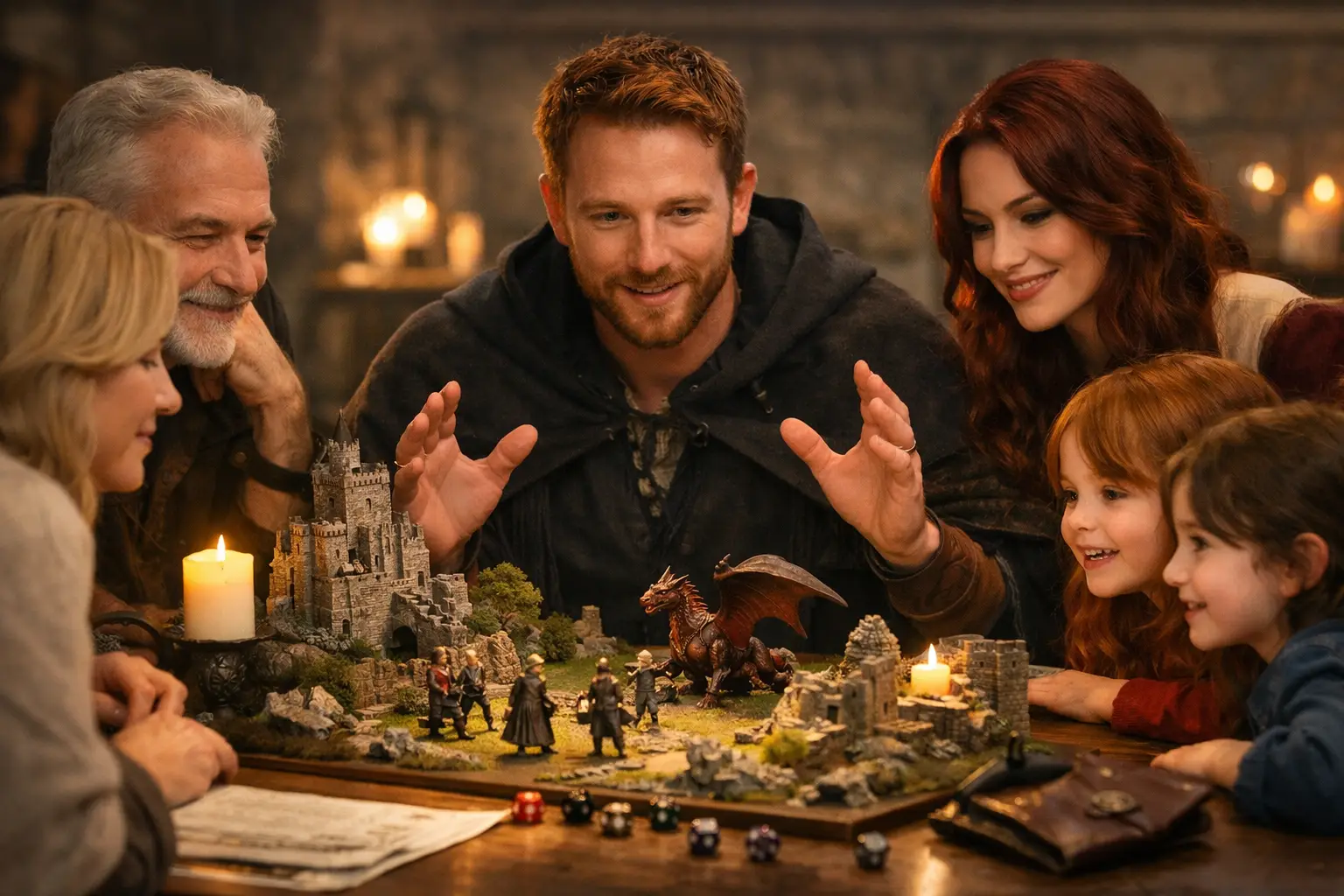
You can feel the difference within the first hour. The room goes still. A clue that seemed ornamental suddenly changes the shape of the investigation. An NPC remembers what you did three sessions ago. A decision made in fear comes back wearing a new face. That is what a professional game master service is meant to do – not merely run a game, but hold a world together so completely that your choices leave fingerprints on it.
For players who have spent years chasing the right table, this distinction is not small. It is the gap between passing entertainment and a campaign that lives in your head all week. Plenty of groups have enthusiasm. Plenty of hobby GMs have heart. But when adults with limited time are looking for consistency, emotional weight, atmosphere, and a story that keeps moving with purpose, professionalism stops being a luxury and starts becoming the thing that makes the whole experience possible.
What a professional game master service actually delivers
At the surface level, paid GMing can sound simple: someone prepares the sessions, knows the rules, and shows up on time. That is part of it, but it is not the reason serious players seek it out. A real professional game master service delivers continuity of vision.
The campaign is not assembled in a hurry from disconnected encounters and borrowed tropes. It is designed. The setting has internal logic. The tone is chosen with intention. Pacing is managed scene by scene so dread can breathe, revelations can land, and victories can cost something. When you step into investigative horror, grimdark intrigue, cosmic mystery, or melancholic retro sci-fi, the genre is not just named – it is sustained.
That matters more than many players realize until they experience the alternative. A casual table can be charming, chaotic, and deeply personal, but it often depends on whoever had enough energy that week to prep. Momentum slips. Threads vanish. Character arcs stall. A campaign that promised danger or wonder slowly turns into scheduling trivia and rules debates. Professional stewardship protects the story from that erosion.
The difference between a hobby GM and a professional game master service
This is where nuance matters. Not every unpaid GM is unskilled, and not every paid GM is extraordinary. Some home GMs are brilliant artists of play. Some paid offerings are little more than organized session hosting. The title alone means very little. The craft behind it means everything.
A true professional operates with repeatable excellence. They know how to read a table without losing control of tone. They can support a newcomer through their first investigation while still giving veteran players meaningful complexity. They understand that rules are tools, not the whole performance. Most of all, they prepare beyond the obvious.
That preparation is rarely visible in a flashy way. It appears in how every clue has a purpose, how every faction wants something specific, how downtime produces consequences instead of empty filler, and how players are never punished for caring deeply about the fiction. The campaign feels alive because someone has done the hard, often invisible work of making it alive.
In premium narrative play, the GM is not just a facilitator. They are part director, part historian, part dramaturg, part systems interpreter, part guardian of emotional rhythm. When that role is handled with discipline and artistry, the table stops feeling like an improvised pastime and starts feeling like a living series you are inside.
Why serious players choose paid campaigns
Most adults do not leave their home groups because they stopped loving tabletop roleplaying. They leave because the experience became unreliable. The game was canceled every other week. The tone never settled. The stakes were announced but never honored. Sessions became noisy, fragmented, or mechanically busy without building toward anything that mattered.
A professional campaign answers those frustrations with structure. Seats are limited. Expectations are clear. Attendance matters. The GM is invested not only emotionally, but professionally, in maintaining quality over the long arc of play. That changes behavior at the table. People arrive ready. They listen. They remember. The campaign gains gravity.
There is also a deeper reason players choose this path: they want to be surprised by the story again. Not random surprise. Earned surprise. The kind that grows from careful foreshadowing, from worldbuilding that continues between sessions, from consequences that alter alliances, geography, reputation, and self-perception. In a strong paid campaign, your character is not orbiting a static setting. The setting is moving in response to you.
That is especially important in systems built for tension and atmosphere. Call of Cthulhu without mounting dread is just clue collection. Delta Green without moral corrosion loses its sting. Warhammer without pressure, grime, and human fragility becomes costume. Tales of the Loop without emotional contrast can flatten into nostalgia. Genre needs stewardship. It needs someone who can maintain the spell.
The hidden craft behind immersive campaigns
Players often talk about immersion as if it were a mood that either appears or does not. In truth, immersion is built from dozens of creative decisions made with consistency.
It begins with narrative architecture. A professional GM understands where to place uncertainty, when to withhold answers, and how to let player agency redirect events without collapsing the campaign. They build enough structure to support consequence, but enough openness that the players can still surprise them. That balance is harder than it looks.
Then there is atmosphere. Not decoration, but atmosphere with function. Historical texture, regional detail, social pressures, recurring motifs, and the language of each scene all help players feel where they are and what is at stake. A city should not just have districts. It should have memory. A cult should not just have a name. It should have methods, silences, and scars. A frontier colony should not just be dangerous. It should carry the weight of what it costs to live there.
Finally, there is emotional design. Great campaigns are not memorable because every fight was balanced perfectly. They are memorable because fear accumulated, trust was tested, grief had room to breathe, and triumph came with a price. A professional game master service worth paying for understands that roleplaying is not simply about what happened. It is about what it meant.
What to look for before you book
If you are considering a premium table, do not just ask what system is being run. Ask how the campaign thinks. Does the world continue between sessions? Do choices reshape the setting in visible ways? Is the tone protected, or does every session risk collapsing into irony and distraction? Does the GM have a clear philosophy of consequence, pacing, and player agency?
Experience matters too, but only if it remains connected to intention. Decades behind the screen are valuable when they produce discernment: knowing when to accelerate, when to let silence linger, when to bring in lore, and when to strip everything back to a single unbearable choice. The best professional GMs do not overwhelm players with content. They curate experience.
It is also fair to look at fit. A highly theatrical, story-first campaign will not suit every player. If you want light drop-in chaos, a premium narrative table may feel too focused. If you want heavy tactical optimization above all else, you may prefer a different style. A strong service is not for everyone, and that is a good sign. Distinct vision usually means stronger delivery.
For players who want worlds that breathe, this is where Mythveil Chronicles stands apart. The promise is not just a seat at a table. It is entry into a campaign shaped with authorship, discipline, and the rare kind of care that lets a setting answer back when you touch it.
The real value of a professional game master service
The value is not that someone else does the prep, though that helps. The value is that the campaign can become larger than scheduling luck, larger than improvisation under pressure, larger than the limitations of a casual table trying to hold epic ambition together with spare time.
When done at a high level, a professional game master service gives players something increasingly rare: sustained imaginative trust. You believe the story will remember you. You believe your choices will matter next month, not just tonight. You believe the next session will honor the tone, the tension, and the promise that drew you in.
That trust changes how people play. They invest more. They risk more. They listen harder. They build characters with interiors instead of gimmicks. They step into the fiction with both feet because the world has proved it will meet them there.
And that is the real threshold. Not payment, not polish, not prestige. The real threshold is whether the campaign feels alive enough to change you a little while you are inside it. If that is what you have been looking for, do not settle for a table that only fills the evening when you could join one that stays with you long after the dice go quiet.